

Boneless Pangasius Fish: The Complete Guide — History, Nutrition, Health Benefits, Uses and More
Boneless Pangasius Fish: The Complete Guide
Winter in Pakistan means one thing on the menu: fish. As soon as the weather turns, customers start searching for crispy fish, fish and chips, grilled fish and boneless fish fillet near me — and the restaurants, cafés and cloud kitchens that are ready for that demand win the season. That is exactly where Boneless Pangasius Fish from Arham Foods earns its place: a clean, boneless, ready-to-cook white fish fillet with a mild taste that works in desi and continental kitchens alike. Arham Foods — One Window Fast Food Solution — delivers it frozen at peak freshness, ready when your orders are. This is the complete guide: its history, its nutrition, how it is made, who should eat it, who should be careful, and how homes and businesses use it.
Why this blog, why now: Pakistan’s frozen food market was US$ 0.77 billion in 2025 and is forecast to reach US$ 1.08 billion by 2031, growing at 5.74% a year (Mordor Intelligence). Ready-to-cook foods hold 42.63% of the market — exactly where a ready-to-cook fillet belongs.
1. History — fish on the Punjabi winter table
Fish has been a winter ritual in Lahore and across Punjab for generations. When the cold arrives, families head to the fish markets and the famous fried-fish stalls, and “fish season” becomes a reason to gather. For decades that meant buying whole fish, cleaning it at home, and picking out bones at the table. Frozen boneless fillets changed the habit: the same winter flavour, without the cleaning, the smell in the kitchen, or the bones. Boneless Pangasius Fish is Arham Foods’ answer to that change — the traditional winter fish, prepared for the modern kitchen. Pangasius — also sold as basa or swai — is a mild, freshwater catfish farmed in Southeast Asia, and its clean white fillet is what makes it the boneless fish of choice for restaurants and homes alike.
2. Journey — from catch to your kitchen
Every Pangasius fillet starts with selected fish at source — filleted and carefully deboned, then frozen fast to lock in freshness. From there it travels in a controlled cold chain to Arham Foods’ branches — Raiwind Road Lahore, Bahria Town Lahore and Kasur — and from there to restaurants, cafés and homes. No long chain of middlemen, no fish sitting on ice losing quality by the hour: frozen at the right time, kept frozen, delivered frozen.
3. Nutrition facts — what is inside (per 100 g, raw pangasius fillet)
| Nutrient | Per 100 g |
|---|---|
| Energy | 70–100 kcal |
| Protein | 13–20 g |
| Total fat | 1–4 g |
| Carbohydrates | 0 g |
| Omega-3 (EPA + DHA) | ~80–200 mg |
| Vitamin B12 | ~2 µg |
Typical values for pangasius (basa/swai) fillet, raw, per 100 g — sources: USDA FoodData Central; Orban et al. 2008 (aquaculture literature). Values vary by species, feed and cooking method; battering and frying add calories, fat and salt.
4. Making process — from source to your kitchen
At source: our suppliers select the fish, fillet and debone it, wash it, then blast-freeze it (individually quick frozen) so each fillet freezes separately and keeps its texture. It is packed, labelled and held at −18°C or below through storage and transport. At Arham Foods we check every delivery on arrival, keep the cold chain unbroken at our branches, and deliver it frozen to your kitchen. In your kitchen: thaw in the refrigerator, pat dry, season or marinate, then batter or crumb for frying, or grill or bake for a lighter plate. A fillet fries in minutes and grills evenly — no cleaning, no scaling, no bones to remove.
5. Health benefits
Fish fillet is a natural source of lean protein — the building block for muscle — with very little fat, so it suits weight-watchers and gym diets. Its omega-3 fatty acids (EPA and DHA) support heart and brain health, vitamin B12 supports nerves and red blood cells, and selenium and potassium add to the package. It is light and easy to digest, which is why doctors and dietitians often recommend fish for family dinners, growing children and older family members — and why health-conscious customers keep searching for high-protein frozen food and healthy ready-to-cook meals.
6. Side effects — the honest part
Fish is one of the major food allergens: anyone with a fish allergy must not eat it, and kitchens should keep it away from allergy-sensitive dishes. Pangasius is naturally low in mercury — the U.S. FDA lists basa/swai among its “Best Choices” fish — but like all fish it should be part of a varied diet rather than the only protein every day; pregnant women and young children should follow their doctor’s guidance on fish. Fried and battered versions add fat and salt, so a grilled fillet is the lighter choice. And never eat undercooked fish — cook it through, and never refreeze a fillet once it has thawed.
7. Domestic utilization — at home
At home, one pack in the freezer covers a weekday dinner, a weekend family fish fry and a guests-are-coming emergency — without a trip to the fish market, without the smell of cleaning fish at home, and without worrying whether the fish is fresh today or not. Because it is boneless, parents serve it to children without worry, and it fits lunchboxes, iftar tables and family gatherings alike. Thaw only what you need; the rest stays frozen for next time.
8. Industrial usage — for food businesses
For restaurants, cafés, cloud kitchens, caterers and hotels, Pangasius is a menu workhorse: fish and chips, fish burgers, desi-style fried fish, grilled platters, wraps and sandwiches — one fillet, a whole section of the menu. Portions stay uniform, so food cost stays predictable and every plate looks the same on a busy Friday night as on a quiet Tuesday. Faster cooking means faster table turnover and faster rider dispatch for delivery orders — a real advantage for cloud kitchens competing on food delivery apps, where fish burgers and fish and chips are among the most searched fast food items in Pakistan.
9. Product handling — keep it cold, keep it safe
Store at −18°C or below and keep it frozen until use. Thaw in the refrigerator — never at room temperature, and never in warm water. Cook soon after thawing, cook it through, and do not refreeze thawed fish. Keep raw fillets away from ready-to-eat foods, wash hands and boards after handling, and check the pack’s date before use. Handled this way, frozen fillet keeps its flavour far longer than fresh fish, which loses quality by the hour — less spoilage, better stock planning, and no menu item suddenly going unavailable in the middle of service.
10. Available articles & brands
Boneless Pangasius Fish is available from Arham Foods — Raiwind Road Lahore, Bahria Town Lahore and Kasur — and it can be ordered together with frozen fries, chicken nuggets, burger patties, zinger fillets, mozzarella cheese, sauces, spices and complete food packaging in a single order. Browse the full range on the products page. Pack sizes and current prices are available in store and on enquiry, so every customer gets the exact size their kitchen needs.
11. Types of products — how Pangasius is served
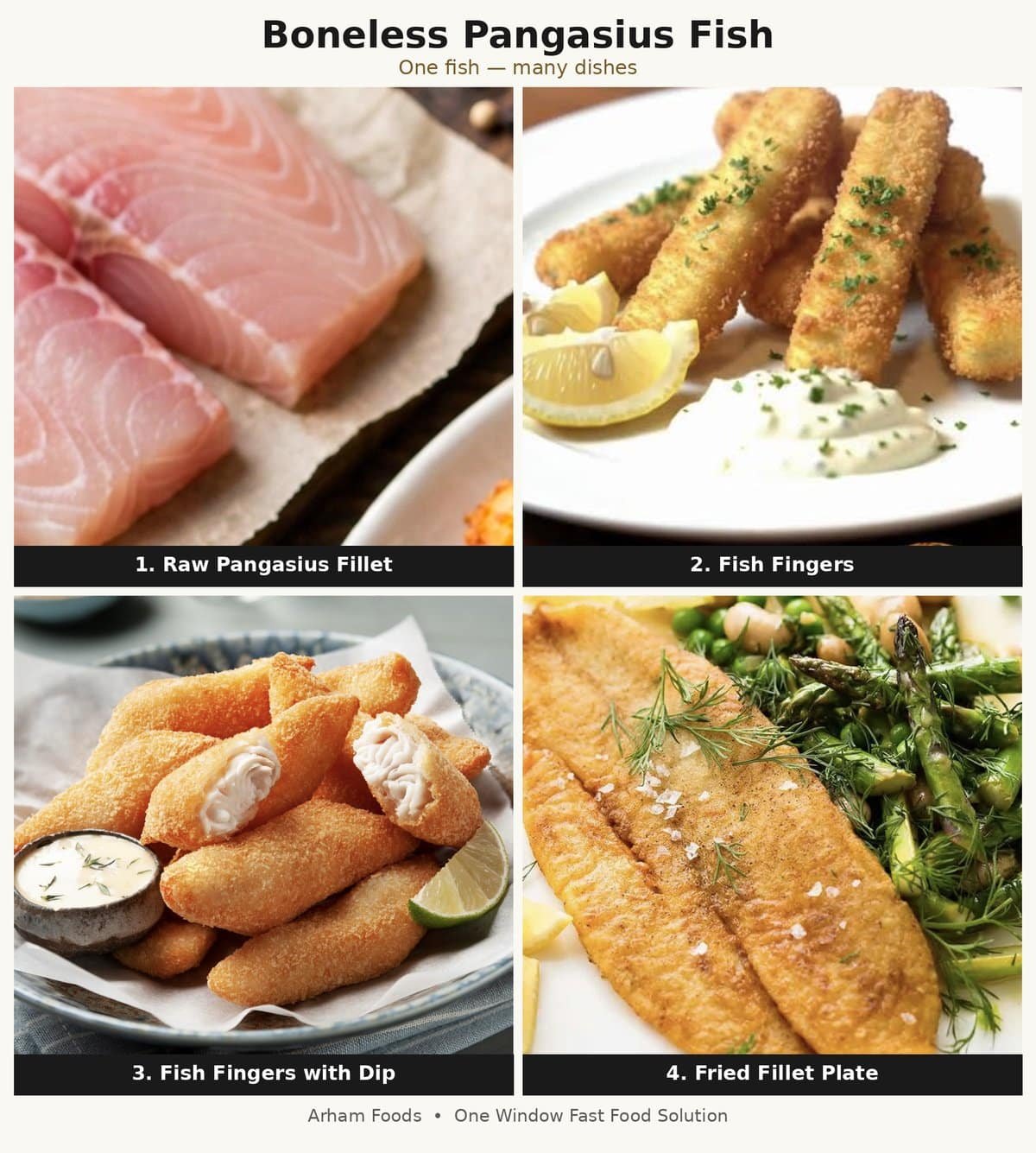
The same fillet takes many forms on the menu: plain grilled fillet for a light, premium plate; battered fillet for classic crispy fish and chips; crumbed fillet for a crunchy fish burger; desi masala-marinated fried fish; and sliced fillet in wraps, sandwiches and platters.
12. Comparison — Pangasius vs the alternatives
Whole fresh fish means bones, head and trimming loss, uneven portions and 30-plus minutes of cleaning — and it must be used the same day. Ordinary frozen fish often still carries bones and uneven sizes. Pangasius removes the waste and the guesswork: no bones, almost 100% usable meat, uniform portions, minutes of prep time, months of frozen storage — what you pay for is what you serve, and the cost of every plate is known in advance.
13. Quality — how Arham Foods keeps it
Arham Foods is a wholesaler, not a manufacturer — our job is sourcing right and keeping quality. We work with trusted producers, check every delivery on arrival, and keep the cold chain unbroken from supplier to branch to customer. Correct storage, honest weights and clean handling are treated as the product itself, not extras. That discipline comes from years of food industry and supply chain experience, applied to a supply business that too often runs informally.
14. Facts — the numbers that matter
- Pakistan frozen food market: US$ 0.77bn in 2025, growing 5.74% a year to US$ 1.08bn by 2031.
- Ready-to-cook foods: 42.63% of the market.
- Storage temperature: −18°C, always.
- Arham Foods: 800+ clients, 20+ team, 3 branches.
Order Boneless Pangasius Fish from Arham Foods — Raiwind Road Lahore • Bahria Town Lahore • Kasur | arhamfoods.pk — One Window Fast Food Solution. Questions? Contact us.
Keep reading on Arham Foods
- Our blog — including the 9 Years Success Journey of Arham Foods
- Arabian Nuggets — next in the weekly product blog series
- Chicken Nuggets • Fries • Burger Patty • Mozzarella Cheese
- About Arham Foods • Contact us
Authority sources
- USDA FoodData Central — white fish nutrition, per 100 g
- Mordor Intelligence — Pakistan Frozen Food Market (US$ 0.77bn in 2025 → US$ 1.08bn by 2031, 5.74% CAGR)
- U.S. FDA / EPA — “Advice About Eating Fish” (revised October 2021): 2–3 servings a week of low-mercury “Best Choices” fish; seven high-mercury species to avoid in pregnancy and childhood.

